The Claude Certified Architect — Foundations (CCAR-F) is Anthropic's premier technical credential for solution architects, AI engineers, and tech leads designing production systems on Claude 3.5 and 3.7.
Unlike traditional cloud exams focused on memorizing API service names, Anthropic's Pearson VUE exam is 100% scenario-driven and evaluates real-world architectural trade-offs.
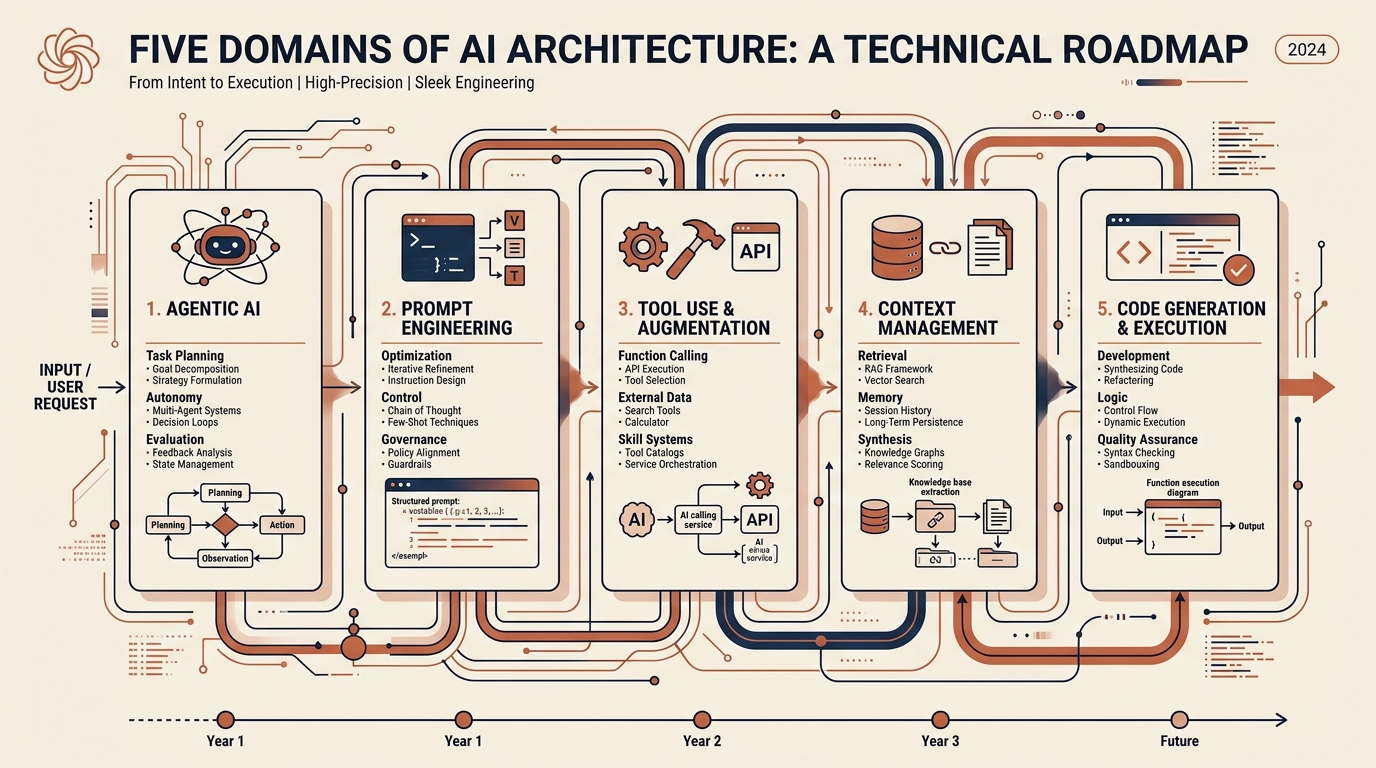
This guide covers everything you need to know to pass on your first attempt: the official exam structure, the 5 weighted domains, common trap questions, and a 14-day study roadmap.
1. Official Exam Overview & Format
The exam is proctored worldwide via Pearson VUE:
| Feature | Official Specification |
|---|---|
| Exam Code | CCAR-F (formerly referenced as CCA-F) |
| Price | $125 USD |
| Number of Items | 60 scenario-based questions (single & multi-select) |
| Duration | 90 minutes (+30 min ESL extension available upon request) |
| Passing Score | 720 / 1000 (approx. 72% weighted accuracy) |
| Scenario Structure | 4 out of 6 official real-world scenarios are drawn per attempt |
| Credential Validity | 12 months (renewable online) |
2. The 5 Weighted Exam Domains
Exam scoring isn't a simple average. Every question carries a weight tied to its domain:
Domain 1: Agentic Architecture & Orchestration (27%) — The Heaviest
- What's tested: Agentic orchestration patterns (Router, Orchestrator-Workers, Evaluator-Optimizer), infinite loop control, stopping criteria, and deterministic human handoff.
- Key architecture decision: When to use a single agent with tools versus a coordinator with specialized subagents.
Domain 2: Claude Code Configuration & Workflows (20%)
- What's tested:
CLAUDE.mdfile configuration, custom Slash Command creation, hard constraints via.claude/settings.json(denypermissions and hooks), and headless execution in CI/CD. - Key architecture decision: How to enforce plan mode on high-blast-radius changes without relying on the human operator's judgment.
Domain 3: Prompt Engineering & Structured Output (20%)
- What's tested: Structured XML tags (
<context>,<instructions>,<examples>), typed JSON output via Tool Use (tool_choice: { type: "tool", name: "..." }), and two-layer defensive validation. - Key architecture decision: A JSON Schema guarantees type and format, but never honesty or cross-field consistency. Business validations must run in runtime code (e.g. Zod
superRefine).
Domain 4: Tool Design & MCP Integration (18%)
- What's tested: Model Context Protocol (MCP) architecture, Stdio vs. SSE transport, clear separation between generic tools (Read, Bash) and custom domain tools, and typed error signaling.
- Key architecture decision: Tools shouldn't throw generic text exceptions when a business limit is hit; they should return structures like
{ "needs_escalation": true, "reason": "over_limit" }.
Domain 5: Context Management & Reliability (15%)
- What's tested: Prompt Caching (1,024-token minimum, static placement of fixed headers, 90% discount on cache reads), context pollution mitigation, and graceful degradation.
- Key architecture decision: The multi-agent coordinator should never read subagents' raw transcripts, only structured fact summaries.
3. Top 5 Architectural Traps That Fail Candidates
- Relying on Business Rules in Prompt Text Alone:
- Mistake: Putting in the system prompt: "Never approve refunds above $100."
- Correct Exam Solution: Configure the MCP tool to check the value and return a deterministic escalation status.
- Context Pollution in Multi-Agent Systems:
- Mistake: Passing a research subagent's full message history to the coordinator agent.
- Correct Exam Solution: The subagent returns only a structured list
{ subtopic, findings, sources }.
- Getting the Prompt Caching Rules Wrong:
- Mistake: Trying to cache blocks smaller than 1,024 tokens or placing dynamic messages before the cache block.
- Correct Exam Solution: Caching requires 1,024+ tokens and must be placed statically at the start of the prompt.
- Missing a Hard Stopping Criterion in Agentic Loops:
- Mistake: Letting the agent run for as long as the model thinks necessary.
- Correct Exam Solution: A strict iteration limit (
max_turns) + timeout + fallback to human review.
- Handling CI/CD False Positives with Prompts Alone:
- Mistake: Instructing Claude Code in CI: "Be very careful and avoid flagging false positives."
- Correct Exam Solution: Have the model return a numeric confidence score and filter in the pipeline only items with
confidence >= 0.8.
4. 14-Day Practical Study Roadmap
- Days 1–3 (Fundamentals & Prompt Engineering):
- Study XML tag syntax and the Anthropic Messages API.
- Complete lessons 00–05 of the Free CCAR-F Study Track.
- Days 4–7 (MCP & Claude Code):
- Set up a local MCP server and implement Claude Code commands.
- Clone the aicertstudy/labs repository and run scenarios 1, 2, and 4.
- Days 8–10 (Agentic Architecture & Multi-Agent Systems):
- Run scenarios 3 and 5 from the practice repository.
- Understand context isolation flows and headless CI/CD pipelines.
- Days 11–14 (Timed Mock Exams & Weakness Diagnosis):
- Take full-length, timed 60-question mock exams on AICert Study.
- Use the performance report to identify domains scoring below 75% and drill them specifically.
5. How to Start Practicing Right Now
At AICert Study, we've structured your full preparation into two steps:
- 100% Free Study Track: 21 conceptual lessons with hands-on labs and per-domain quizzes.
- Official Weighted Mock Exams: 1,049+ scenario-based questions, a real 90-minute timer, a detailed answer key with official references, and instant weak-spot diagnostics.